
Voices
The rise of short-form video platforms has reshaped the way music spreads, but it has also created new debates about who actually controls an artist’s success. While traditional record labels have historically guided promotion and visibility, platforms like TikTok have introduced a system where everyday users can influence what becomes popular.
Perspective 1:
One perspective argues that TikTok has changed music discovery by giving fans a bigger role in spreading songs. This challenges the idea that record labels are the main reason artists succeed. A report by Stuart Dredge states that TikTok helps “80% of its users discover new music.” The chart below shows how TikTok compares to other platforms in helping users find new songs.
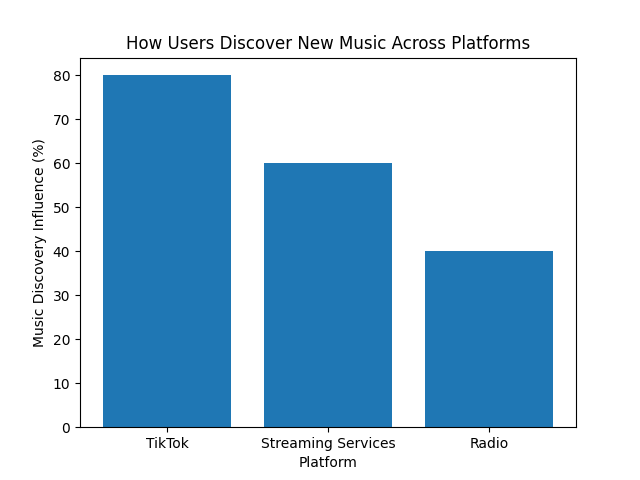
Figure 1: Bar chart comparing how people discover new music across platforms, showing TikTok with the highest percentage. This supports the idea that TikTok plays a major role in exposing users to new songs and increasing fan influence.
As shown in the chart, TikTok has the highest percentage, proving it plays a major role in introducing users to new music. This suggests fans now have more influence because they actively share and interact with songs. In her TEDx talk, Padmini Simhan explains that music spreads through everyday users, using examples of viral trends to show how quickly songs gain popularity. However, going viral does not always lead to long-term success, meaning record labels still play an important role.

Perspective 2:
Another perspective argues that going viral does not always lead to real success. This challenges the idea that TikTok can fully replace record labels. In her TEDx talk, Simhan explains that many users only listen to short parts of songs instead of the full track. This shows a gap between popularity and real recognition.
Simhan explains that people often remember a 10–15 second clip but cannot name the artist. The fast-paced visuals in the video highlight how short attention spans affect music. This means a song can trend without helping the artist build a loyal fanbase. Overall, this shows that TikTok creates attention, but not always lasting success.

Perspective 3:
A third perspective focuses on how TikTok shapes how people
view success. It shows that success is not just about numbers,
but also about perception. Simhan explains that users feel
connected to songs they help make popular, making them
feel involved in an artist’s rise. This changes how success is
understood.
The video visuals, like trends and user participation, show how
involved people feel in music culture. At the same time, TikTok
can lead users to search for artists on other platforms. This
shows that TikTok encourages deeper engagement beyond the
app. Overall, it shapes both the reality and image of success.
There is no simple answer to who controls a song’s success. Some believe fans and social media have the most power, while others believe the music industry is still important. In reality, both play a role. Music success today is influenced by multiple factors that are always changing.
Create Your Own Website With Webador